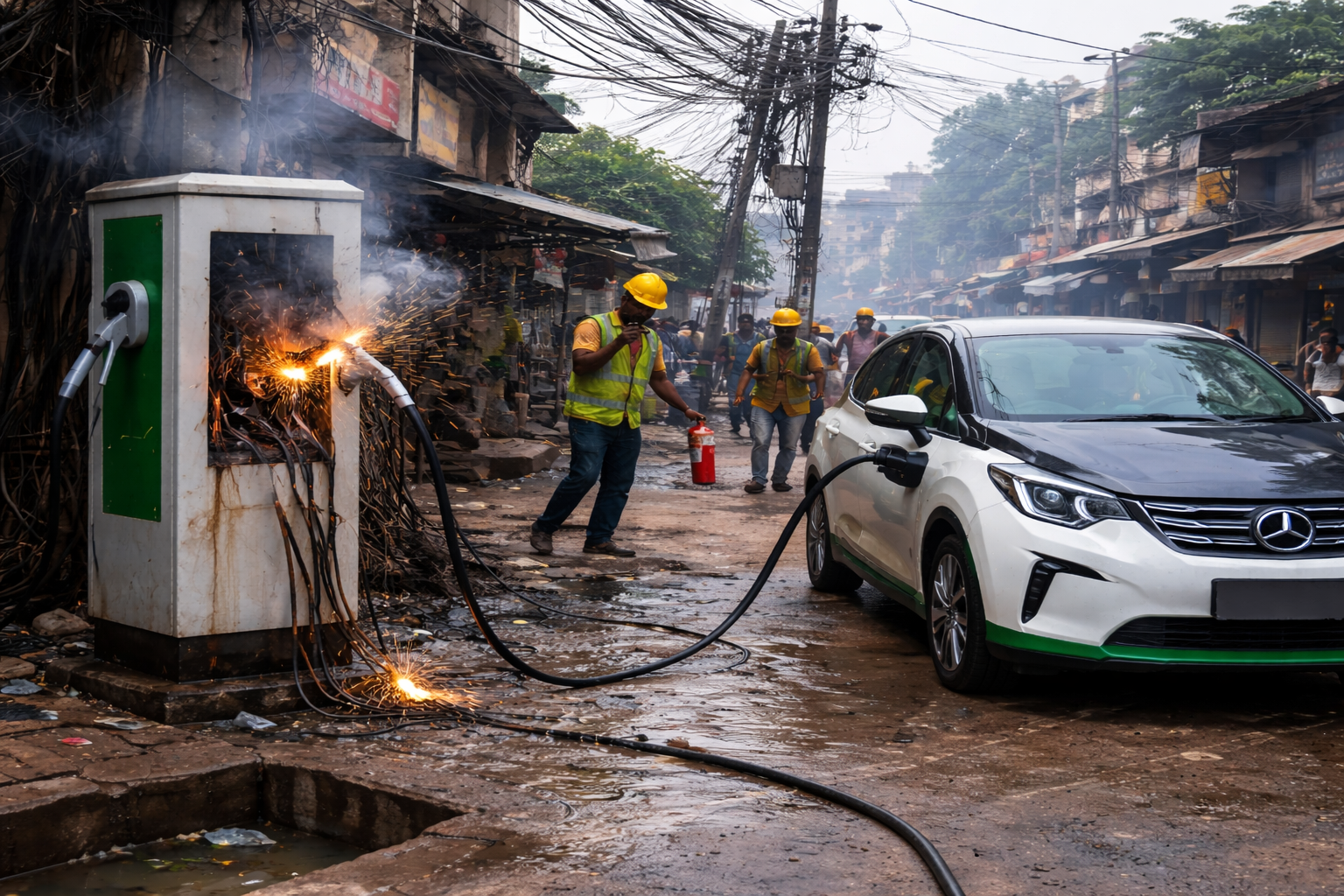
EV Charging Infrastructure Safety Challenges in India
10 Feb 2026
The rapid adoption of electric vehicles (EVs) in India is reshaping mobility and energy consumption. With government incentives, rising fuel costs, and sustainability goals, EVs are increasingly seen as the future of transport. However, this transition brings with it a new set of electrical safety challenges. Unlike conventional vehicles, EVs rely heavily on complex electrical systems, lithium-ion batteries, and charging infrastructure—all of which introduce risks if not managed properly. Recent incidents in Maharashtra, including a battery fire in Thane (Feb 2026) and a commercial blaze in Andheri (Jan 2026), highlight the urgent need to address these challenges. These events underscore the importance of electrical safety audits in India, robust training, and preventive measures to safeguard lives, property, and the credibility of EV adoption.
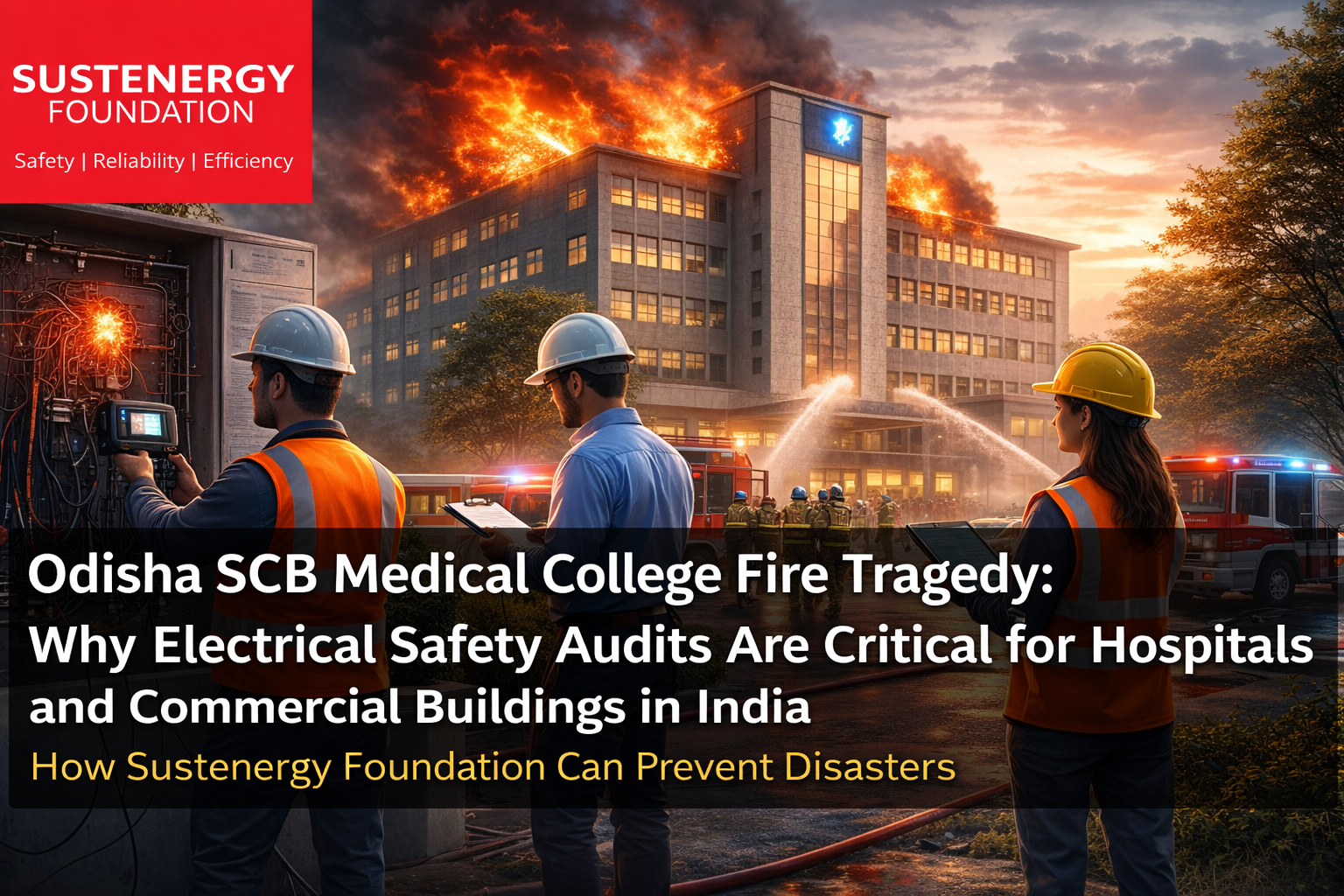
Odisha SCB Medical College Fire Tragedy: Why Electrical Safety Audits Are Critical for Hospitals and Commercial Buildings in India
16 Mar 2026
On 16 March 2026, a tragic fire at SCB Medical College and Hospital in Cuttack, Odisha, shocked the entire nation. The incident resulted in the death of at least 10 patients and injuries to several hospital staff members after a fire broke out in the Trauma Care ICU during the early morning hours, when many patients were on ventilators and oxygen support, making evacuation difficult. This heartbreaking incident once again highlights a harsh reality — lack of proper electrical safety, fire protection systems, and periodic audits can turn critical facilities into disaster zones. For hospitals, hotels, IT parks, industries, and commercial buildings, proactive safety measures are not optional — they are essential. This article explains the incident, its lessons, and why Electrical Safety Audit, Fire Safety Audit, and Energy Audit services by Sustenergy Foundation are crucial for every facility in India.